


Acropolis
Acropolis
Couldn't load pickup availability
Free delivery on orders over €70
Free delivery on orders over €70
Treat yourself without extra charges. Free delivery for any order of €70 or more via Mondial Relay.
Perfect gift
Perfect gift
Offer an original, durable and characterful product. A perfect idea to surprise your loved ones with a unique creation by Loufoque.
Responsive customer service
Responsive customer service
Questions? Our team will get back to you within 24 hours to assist you before and after your order.
| 1 to 4 players | 25 min | 8 years and up |
Akropolis is a tile-placement strategy game where each player becomes the architect of their own ancient Greek city. In an atmosphere inspired by the ancient Mediterranean, you will build dwellings, temples, markets, gardens, and barracks while adhering to specific harmony rules to earn prestige and victory points. Accessible from 8 years old and awarded the As d'Or – Game of the Year 2023, this game offers a quick experience (around 25–30 min) yet rich in tactical decisions for fans of placement and urban development.

How to play the game Akropolis?
Game Setup
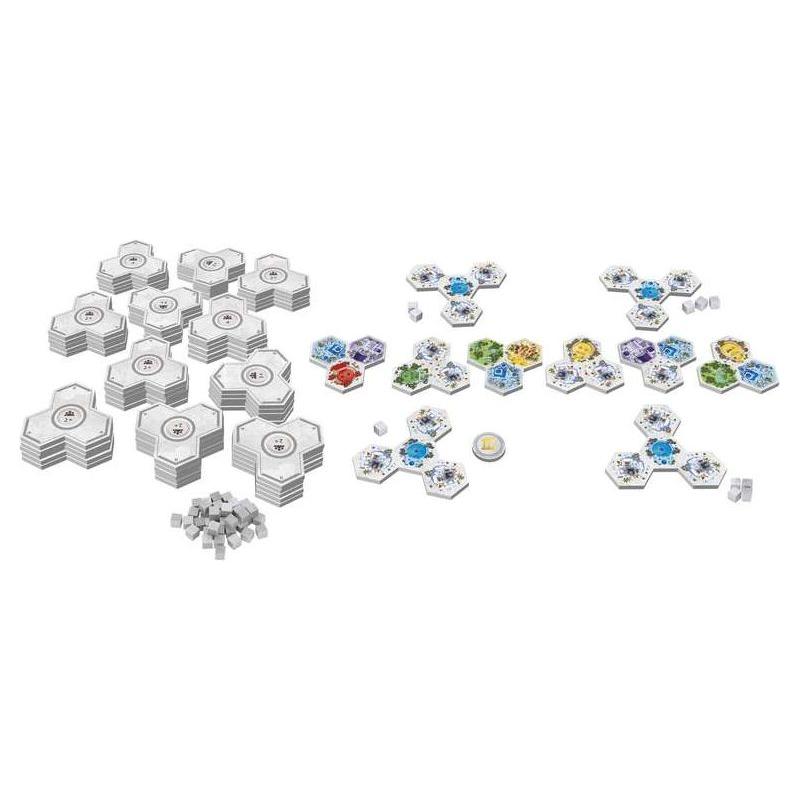
- Take out the following materials:4 starting tiles,61 city tiles,40 stone cubes,1 Chief Architect pawn,4 player aidsand ascore pad.
- Place the starting tiles in front of each player and the resources within everyone's reach.
- Create arow of available tiles(often called a construction site or market) from the shuffled city tiles.
- Choose thestarting player, who often has the Chief Architect pawn.
Gameplay outline
- In each round, a player takes two actions:
- Select a tilefrom the available tile queue. Tiles further away cost more stonebut may offer better scoring opportunities.
- Place this tile in their city, respecting the placement constraints imposed by each type (presence of quarries, specific adjacencies, etc.). - By building, you can stack your districts vertically, which increases their potential value in the final score.
- Certain buildings offer bonuses or obligationsdepending on their type (for example, barracks must be on the periphery or temples perfectly surrounded).
- Stone is the key resource: it allows access to more advantageous tiles and more efficient construction.
Win/Loss Condition
The game ends when all tiles have been placed.Each player then calculates their victory points:
- Points for each district according to the constraints met and their position.
- Bonus for homogeneous zones or tall buildings.
The player with the most victory points totalwins the game.
Our Tips for Winning
-
Plan your zones before building
Anticipate the general shape of your city: overall planning will help you place your districts harmoniously and maximize end-game points.
-
Effectively manage your stone resources
Stone is essential for selecting tiles further away from the construction site. Don't spend it all too early: save some to access strategically interesting tiles.
-
Look for neighborhood synergies
Some tile types get stronger when placed next to similar tiles or in specific configurations: leverage these synergies to score more points.
FAQ – All About Akropolis
What makes Akropolis unique among tile-placement games?
Akropolis combines tile placement, vertical building, and thematic harmony constraints, offering rich tactical gameplay despite easy-to-learn rules.
What's in the game box?
The box contains city tiles, stone cubes, starting tiles, a Chief Architect pawn, player aidsand a score padto track your performance.
Can we enhance the game experience?
Yes: expansions like Akropolis: Athenaadd objectives and additional strategic layers for regular players.
What age is this game recommended for?
Akropolis is suitable for ages 8 and up, combining accessibility and depth for strategists young and old.