


Flatiron
Flatiron
Couldn't load pickup availability
Free delivery on orders over €70
Free delivery on orders over €70
Treat yourself without extra charges. Free delivery for any order of €70 or more via Mondial Relay.
Perfect gift
Perfect gift
Offer an original, durable and characterful product. A perfect idea to surprise your loved ones with a unique creation by Loufoque.
Responsive customer service
Responsive customer service
Questions? Our team will get back to you within 24 hours to assist you before and after your order.
| 2 players | 45 min | 12+ years |
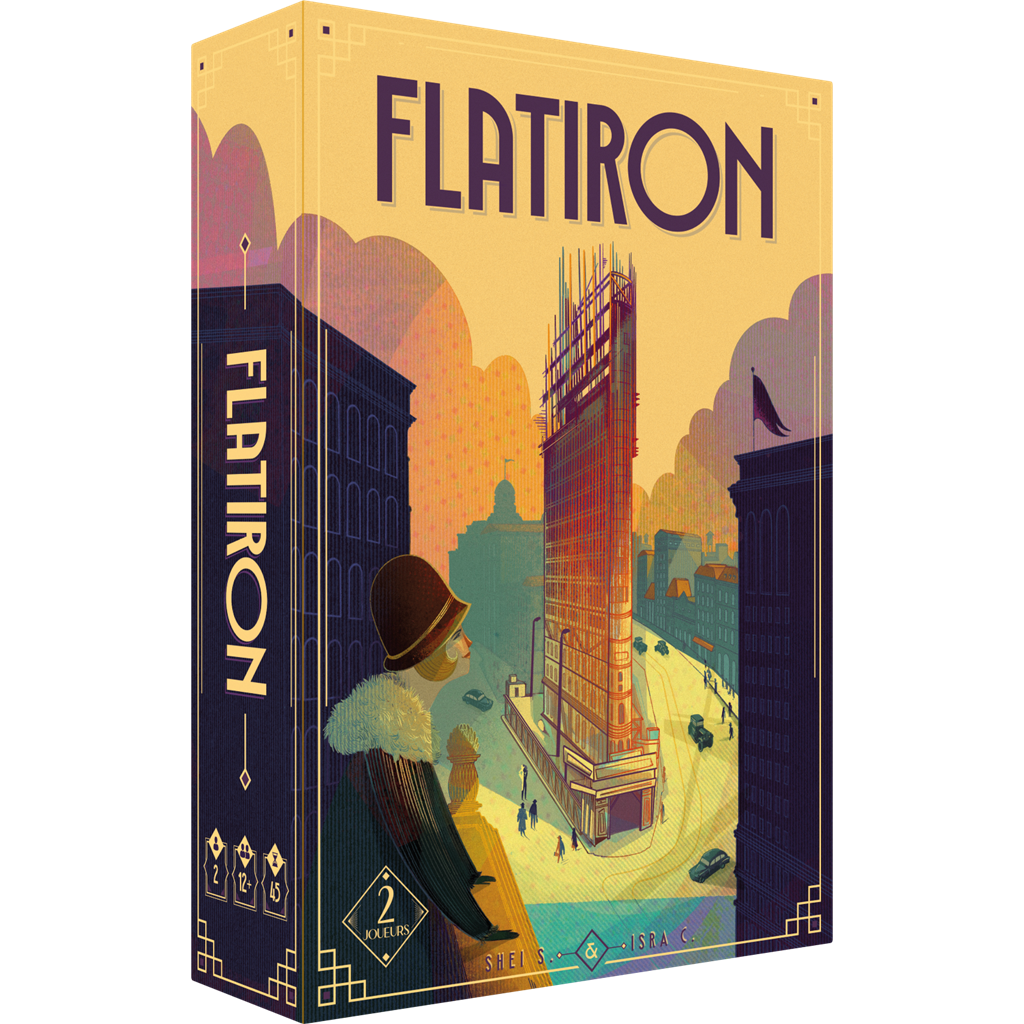
Flatiron is a strategic board game that transports you to New York in 1900, at the heart of the construction of the famous Flatiron Building. With two players, develop your company, move your architect through the surrounding streets, and use your cards to build pillars, earn money, improve your reputation, and activate powerful bonuses.
Accessible yet deep, this card and placement game offers tense games where every decision counts. The game ends as soon as the Flatiron roof is laid, and the player with the most points wins. A solo mode is also included to challenge architect Daniel Burnham.
How to play Flatiron?
Game Setup
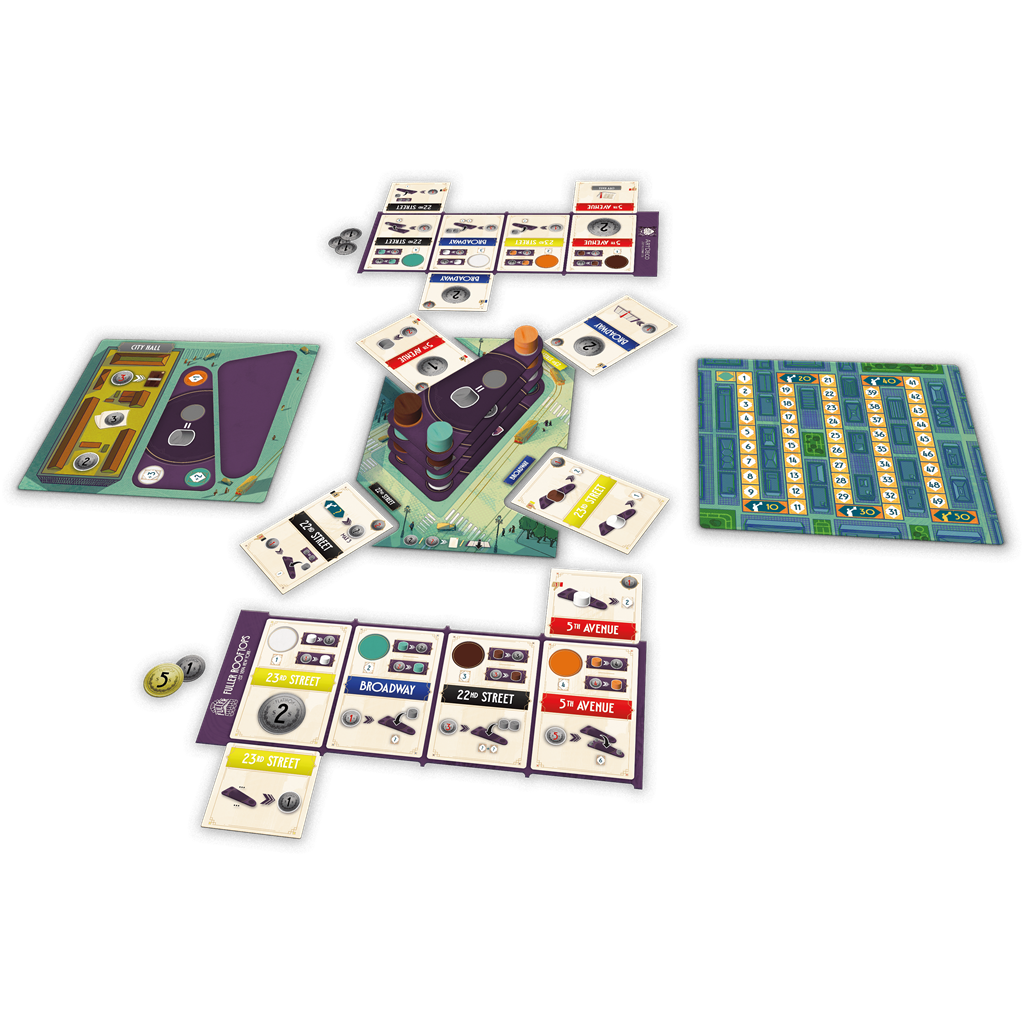
- Each player sets up their personal board with their starting resources and their architect.
- The central board, representing the streets and the construction site, is placed in the center of the table.
- The available cards and construction elements (pillars and floors) are arranged within everyone's reach.
- The score markers are positioned to track the game's progress.
Gameplay outline
- Players take turns moving their architect to an available action space.
- On their turn, a player chooses a strategic action: acquire a card, activate its effects, or gain money.
- Cards allow players to develop a personal game engine and optimize their actions throughout the rounds.
- Players progressively build pillars and then floors to score points.
- The game evolves with constant tactical choices, influenced by opposing actions and opportunities on the board.
Win/Loss Condition
The game ends as soon as the building's roof is constructed. Players then tally their prestige points obtained through construction, cards, and their optimizations. The player with the highest score wins this strategic duel.
Our Tips for Winning
-
Develop a coherent strategic engine from the outset
In Flatiron, building your action engine is crucial. From the very first turns, it's essential to select cards that work well together to create efficient sequences. A clear strategy from the beginning allows you to gain efficiency with each turn and optimize your progress throughout the game. Players who neglect this initial phase often fall behind, a deficit that is difficult to overcome.
-
Anticipate movements to control the pace of the game
Moving the architect is a central mechanic in this two-player strategy game. Each position influences available actions and can also block your opponent. It is therefore crucial to anticipate not only your needs but also those of your opponent. A good understanding of the game allows you to control the tempo and create opportunities while limiting those of the other player.
-
Build smart to maximize points
Floor construction should not be rushed. Each building stage can generate strategic bonuses that influence your final score. It is better to plan your development considering these advantages rather than building just to advance. Careful construction management allows for a steady flow of points throughout the game.
FAQ – All About Flatiron
Is Flatiron a strategy game accessible to new players?
Flatiron offers a quick start with clear and structured rules. The actions are easy to understand, allowing for a rapid first game. However, the strategic depth reveals itself over subsequent plays, particularly in optimizing the game engine and managing movements. This makes it an excellent choice for players looking to discover a two-player strategy game.
What is the importance of player interaction?
Interaction is at the heart of the Flatiron experience. Every decision directly influences your opponent, particularly through architect placement and action access. The game creates constant tension where you must both develop your own strategy and monitor that of your opponent. This permanent confrontation makes each game dynamic and engaging.
Does the game involve an element of chance?
Randomness is very limited in Flatiron. The available cards may vary, but the majority of decisions rely on planning and optimization. Players have significant control over their actions, which values strategic thinking and adaptability.
What's the game's replay value?
Flatiron boasts excellent replayability thanks to its diverse cards and various possible strategies. Each game offers new opportunities and forces players to adapt to the situation. The game remains engaging in the long run, even after numerous plays.