


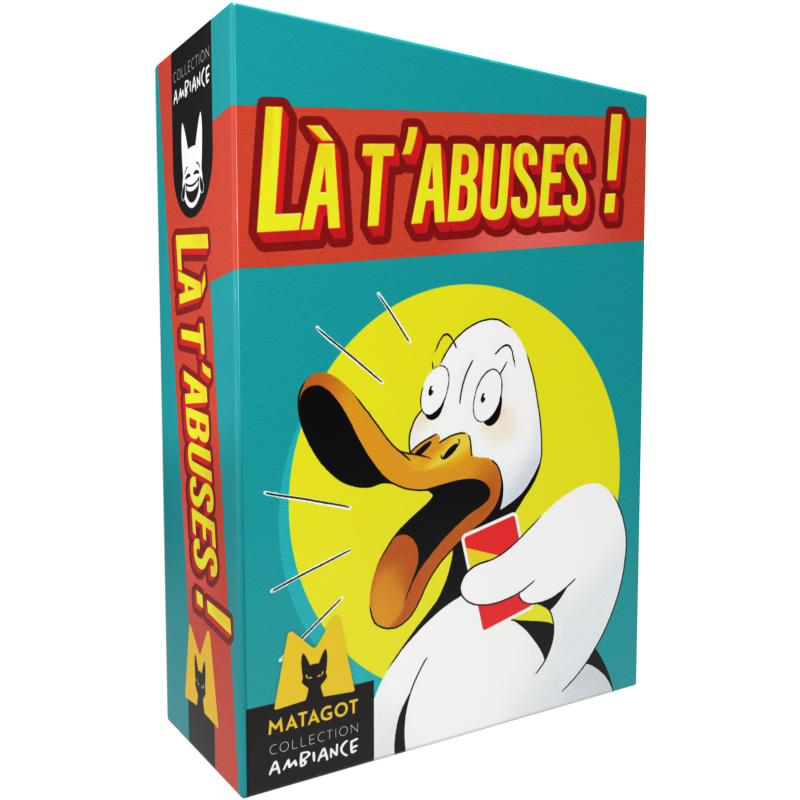
Now you're going too far!
Now you're going too far!
Couldn't load pickup availability
Free delivery on orders over €70
Free delivery on orders over €70
Treat yourself without extra charges. Free delivery for any order of €70 or more via Mondial Relay.
Perfect gift
Perfect gift
Offer an original, durable and characterful product. A perfect idea to surprise your loved ones with a unique creation by Loufoque.
Responsive customer service
Responsive customer service
Questions? Our team will get back to you within 24 hours to assist you before and after your order.
| 2 to 10 players | 15 min | 14 years and older |
Looking for a simple, fast, and effective party game to kick off an evening? Là t'abuses relies on unusual questions... where all the answers are numbers. The principle is as funny as it is strategic: estimate without exceeding, challenge opponents, and dare to take risks. Between bluffing, intuition, and approximate general knowledge, each round sparks debates, surprises, and laughter. Compact and easy to pull out, it's the perfect game to break the ice in minutes.
How to play That's Going Too Far! ?
Game Setup
- Shuffle the cards and form a small draw pile of questions in the center of the table.
- Each player prepares to answer questions where the answers are always numbers.
- Define the first player who will read the first question.
- Provide a space to place the won cards (negative points).
Gameplay outline
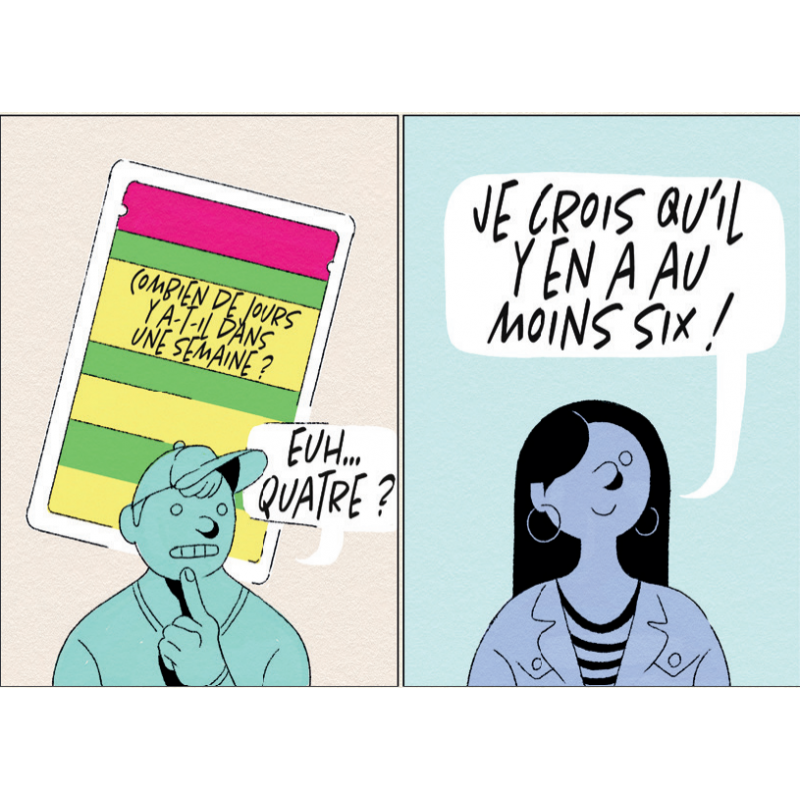
- One player reads a question aloud, the answer to which is a number.
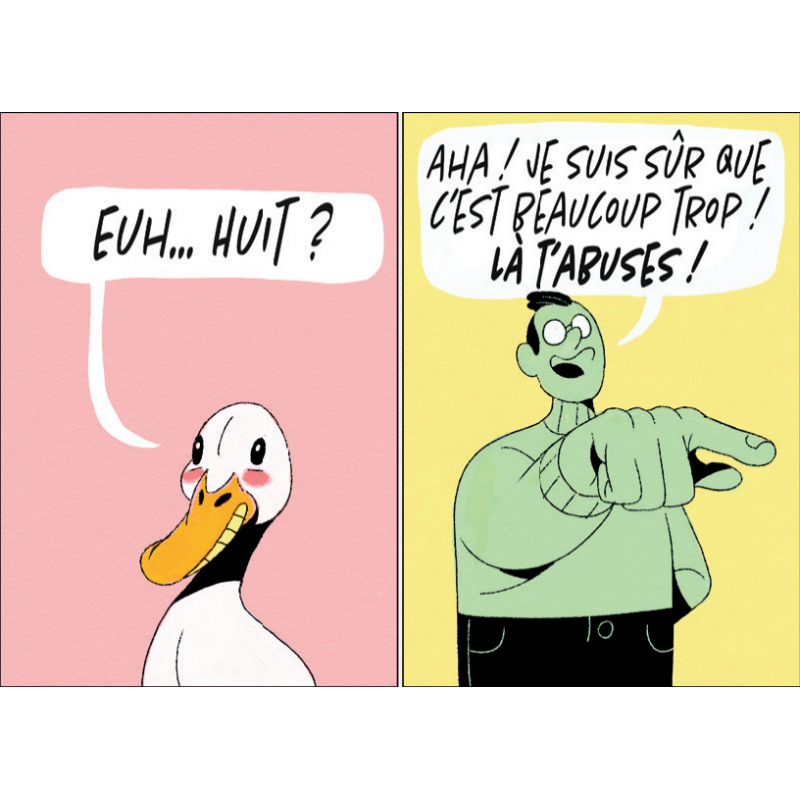
- Players take turns suggesting a number higher than the previous one without exceeding the correct answer.
- A player can challenge by saying "That's too much!" if they think a number is too high.
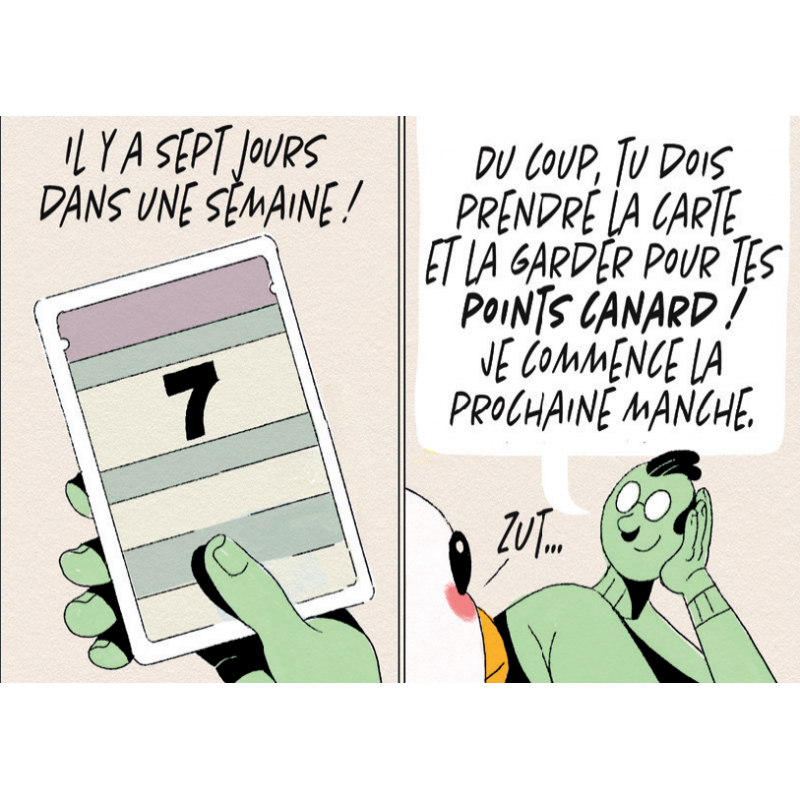
- The answer is revealed: the player who was wrong takes the card as a negative point.
- The game continues over several rounds with constant risk-taking and bluffing.
Win/Loss Condition
After a set number of rounds, the player with the most cards (negative points) loses the game. All other players win.
Our Tips for Winning
-
Striking the right balance between caution and boldness
In There You Overdo It, the entire strategy is based on your ability to estimate a number close to reality without ever exceeding it. Playing too cautiously will make you miss opportunities, but being too aggressive exposes you to challenges. You must constantly adjust your risk level based on previous answers and the context of the game.
-
Observe the habits of other players
Each player has a different way of estimating: some are cautious, others attempt audacious moves. Identifying these behaviors allows you to better anticipate their responses and know when to challenge them. This reading of the game is essential for gaining an advantage.
-
Using bluff to influence the table
Even though the game is based on numbers, bluffing plays an important role. Confidently announcing a number can deter other players from challenging you. Conversely, deliberately hesitating can push someone to attempt a risky challenge. The psychological dimension is a real strategic lever.
FAQ – All you need to know about Là t’abuses
What kind of questions can be found in "Là t'abuses"?
The game offers a variety of questions, often unusual or surprising, whose answer is always a number. This can range from improbable statistics to general knowledge facts. This diversity makes games dynamic and unpredictable.
Is the game solely based on knowledge?
No, even though some knowledge can help, Là t’abuses relies mostly on intuition and risk-taking. Players must estimate, observe, and sometimes bluff to get by, which makes it accessible even without being an expert.
Why does the game work so well in the evening?
Thanks to its simple rules and quick format, it can be explained in seconds and played immediately. The exchanges between players, the debates about the answers, and the challenges create a friendly and often very funny atmosphere.
What's the game's main difficulty?
The main difficulty is finding the right estimate without going over. This requires a mix of logic, intuition, and observation of other players, especially when the values become high towards the end of a round.